Pilates for Back Pain, Back Strength and Spine Health
Private Pilates can be a careful, practical way to support the back, build strength and help the body move with more confidence. The Reformer is one useful piece of apparatus, but it is not the whole story. The work is about learning how the spine, core, hips and back body can work together with more control.
Back Extension on the Reformer Box with the Arcus
This short video shows a controlled back extension that strengthens the back and lats, activates the glutes and hamstrings, and encourages length through the body.
Why back pain is often about more than the spine
Back discomfort can affect the way you sit, stand, walk and move through the day.
Sometimes it feels like stiffness after too many hours at a desk. Sometimes it shows up as tension through the lower back, hips, shoulders or neck. Often, it is not just about one painful spot. It is about how the whole body is supporting itself.
Back pain can be affected by posture, long periods of sitting, weak core support, tight hips, limited mobility, stress, old injuries or movement habits that have built up over time.
When the body feels unsupported, the back often compensates. The lower back may grip. The shoulders may lift. The hips may stop moving freely. Over time, these small patterns can make everyday movement feel harder than it should.
How Pilates apparatus can support the back
Pilates can be a useful way to rebuild support with care. The aim is not to force the body into a perfect shape, or to chase quick relief. It is to help you move with more awareness, more strength and more control, so the back is not left doing all the work on its own.
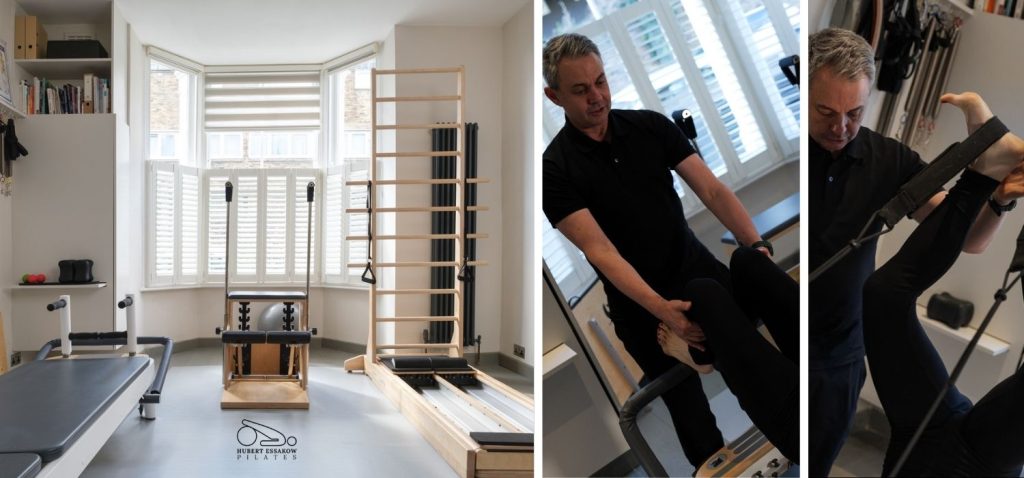
Hubert's Camberwell studio is not limited to the Reformer. It is a private, fully equipped Pilates studio with several pieces of apparatus that can be used according to the person, the movement goal and the level of support needed on the day.
The Reformer is one valuable part of that wider studio setup. Its springs, straps and moving carriage create resistance, but also guidance. Other Pilates equipment can also help organise the body, support alignment and give the teacher more options for building strength, mobility and control.
The studio includes Balanced Body equipment, a respected Pilates equipment brand known for professional Pilates apparatus and education. The equipment matters because it gives the session more range: exercises can be adapted, supported or progressed depending on what your body needs.
If you are new to this type of studio work, you can learn more about the wider Reformer approach in my guide to Reformer Pilates benefits and techniques, while remembering that private sessions may also use other apparatus where appropriate.
Building back strength, not just chasing pain relief
A stronger back is not built by forcing big movements. It is built through small, precise work that teaches the body how to organise itself.
In Pilates, back support often comes from several areas working together: the deep core muscles, the muscles along the spine, the lats, the glutes, the hamstrings, the hips and pelvis, and the breath.
When these areas begin to coordinate better, the back does not have to carry everything alone. Movement starts to feel more even. Posture becomes less about holding yourself stiffly and more about finding support from within.
Exercise focus: Back Extension on the Reformer Box with the Arcus
One useful example is a Back Extension exercise performed on the Reformer box with the help of the Arcus.
This is not mainly an arm or shoulder exercise. The focus is on controlled back extension, back strength and length through the spine. The movement asks the back muscles and lats to work, while also encouraging activation through the glutes and hamstrings.
When performed well, the exercise is not about lifting as high as possible. It is about finding a smooth, supported movement where the spine lengthens, the back body strengthens, and the whole body stays connected.
What this exercise works
Why the Arcus helps
The Arcus gives the body a clear shape to work with. It supports the curve of the movement and helps create a sense of length rather than compression.
For many people, back extension can easily become too much in the lower back or too effortful in the shoulders. The Arcus can help the body find a more balanced pathway. It encourages the front of the body to open, while the back body works with more precision.
Posture, length and everyday movement
Many clients notice that Pilates helps them feel taller or more upright. That does not come from pulling the shoulders back or trying to stand perfectly. It comes from better support.
When the back, core, glutes and hamstrings begin to work together, posture can feel more natural. You may become more aware of how you sit, how you stand, how you lift, and how you move through daily life.
This is the kind of progress that matters. Not a dramatic promise, but a steady change in how the body feels and responds.
How private sessions make the work more personal
Back work needs attention. Two people can arrive with similar symptoms and need very different starting points.
In a private Pilates session, the work can be adapted to your body. Depending on what is needed, the session may use the Reformer, other Pilates apparatus, mat-based work or smaller props. We may begin with breathing, small movements, supported spinal mobility, gentle strengthening or simple coordination work. From there, the exercises can become more challenging as your body gains confidence.
The point is never to push through pain. The point is to find a way of moving that feels safe, clear and useful.
If you would like individual guidance, you can explore private Pilates sessions in Camberwell.
A gentle place to start
The first step does not need to be dramatic. Sometimes it is simply learning how your body is moving now, and what kind of support would help it move better.
Private Pilates gives you space to work carefully, ask questions and build strength at the right pace, using the apparatus and exercises that make sense for your body.
Book a private sessionFrequently asked questions
Can Reformer Pilates help with back strength?
Yes, Pilates can help build back strength by working the spine, core, glutes, hamstrings and postural muscles together. The Reformer may be used, but it is one part of a wider Pilates apparatus approach. The focus is controlled movement rather than force.
Is Back Extension suitable for beginners?
It depends on the person and how the exercise is set up. In a private session, the movement can be adjusted carefully so the body has support and the work stays appropriate.
What muscles does a Reformer Back Extension work?
It can work the back muscles, lats, glutes, hamstrings and deep postural muscles. The aim is to create length and control through the body, not simply to lift higher.
Can Pilates help posture and spinal mobility?
Pilates can support posture and spinal mobility by improving awareness, strength and control. It is most useful when the work is personalised and performed with careful guidance.